

⏱️This edition of the National Account’s newsletter is a five-minute read.
👋 G’day everyone, Archie here.
Today, I’ve got two great yarns - that aren’t petrol price related - to head into the weekend with, so let’s crack on 🗞️.

Of Australia's 37 public universities, 26 take money from fossil fuel companies.
🗣️ Why did it say that?
This week, the a senate committee looking at mis/disinfomation about climate change and energy released it’s report. It’s nearly 300 pages long and I’ve worked my way through it.
The big flags: I looked specifically at chapter three of the report, which detailed a playbook of climate obstruction.
It basically spells out what corporations, think tanks and other organisations do to try and create doubt, buy legitimacy, fake grassroots campaigns and hide the money.
For my full rundown check out today’s video:
I’ll be doing some more coverage on this report next week!
Under surveillance 📡
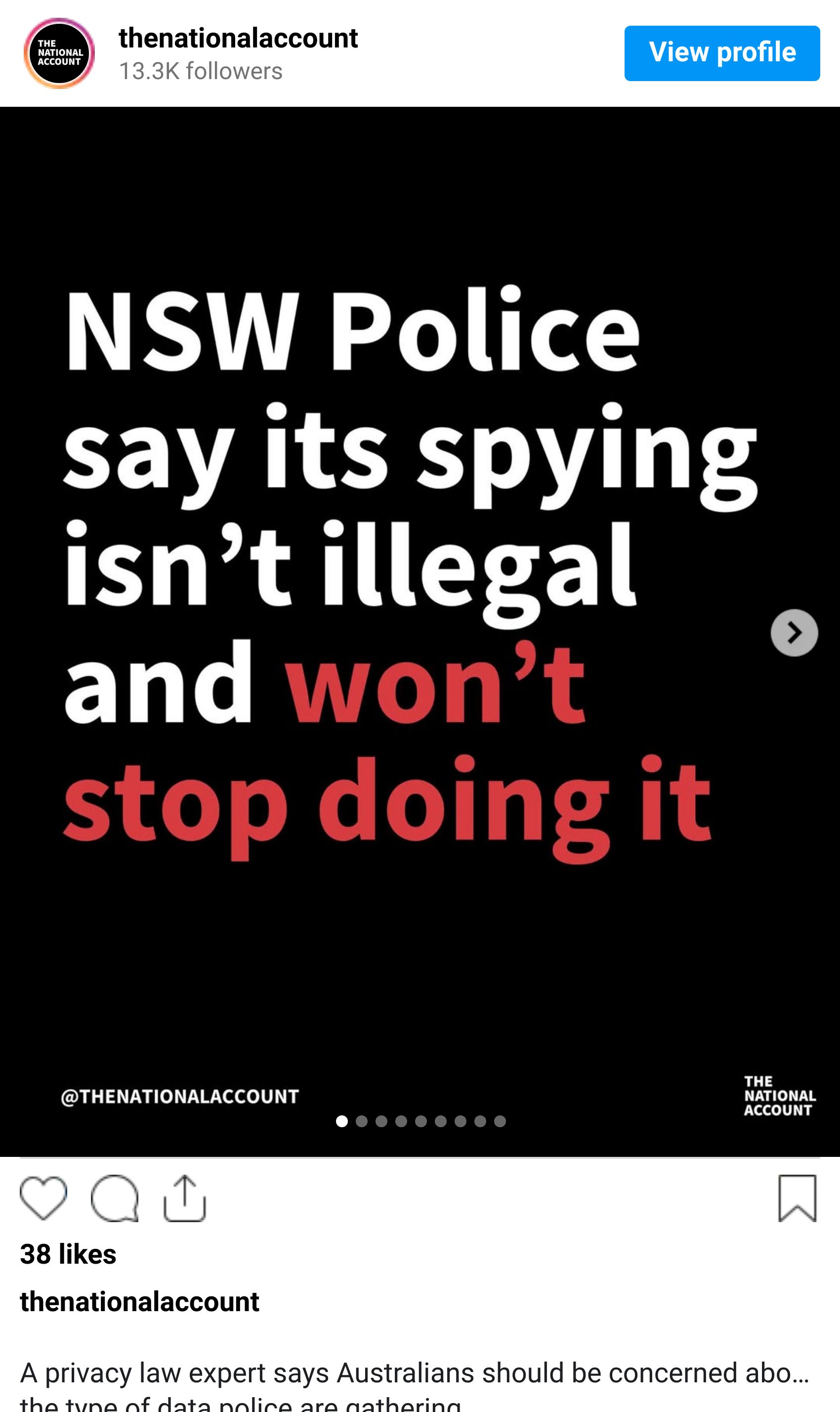
What happened? A Government watchdog has accused NSW Police of potentially illegal surveillance, an accusation the force rejects.
The Commonwealth Ombudsman's report on the use of Covert Electronic Surveillance, released in mid-March, accused NSW Police of spying on people despite their suspected crimes not being severe enough to justify the surveillance.
Surveillance: The type of surveillance police were accused of misusing relates to telecommunications metadata.
Metadata is not the content of a communication. Rather, it is the date, time and duration of a communication, as well as the sender, recipient, and location (via cell towers) of the sender.
A privacy law expert calls this a very intrusive type of surveillance.
The law: To actively monitor someone’s metadata police have to suspect them of a crime punishable by at least three years' imprisonment.
In 24 cases, the Ombudsman said police added a conspiracy charge to a minor offence to justify surveillance.
Book keeping: The Commonwealth Ombudsman found eight government agencies were not keeping appropriate records of surveillance, including the NSW Police, Queensland Police and Victoria Police.
The report said the non-compliance from the Victorian and Queensland police services had been ongoing for the last six and seven years respectively.
Warrantless: Deakin University Law Professor Shiri Krebs told the National Account the retrieval and surveillance of metadata doesn’t require a warrant and instead the authorisation of surveillance is done within the police force.
Krebs said we should “understand that this is an intrusive type of data that should not be expanded as a warrantless regime whether we have the requirement of a serious offense or not.”
“Ultimately, without the warrant and with documentation issues, there are really not enough protections against overuse or misuse of that regime.”
Rejection: The Ombudsman recommended NSW Police:
Stop using the additional conspiracy charge to justify spying on people.
Provide sufficient information that spying on someone is related to the investigation of a serious crime.
NSW Police rejected the recommendations, telling the Ombudsman it interpreted the law differently.
Is this fine? Professor Krebs said it’s important law enforcement have the tools they need to combat crime.
However, she emphasised the need to ensure that segments of the community, like minority groups, feel safe and not targeted by invasive or intrusive police surveillance methods.
“I do think that we must have a deeper conversation around the collection of metadata.” Krebs said.
Finally, in case you missed it - here’s a quick clip from my interview with Punter’s Politics from earlier in the week:

Thanks so much for all the helpful and kind feedback on these newsletters, it means a lot. If you have something to share, an idea, or something you’d like done differently, get in touch 👋.
I’ll be back on Monday.
Cheers, Archie